


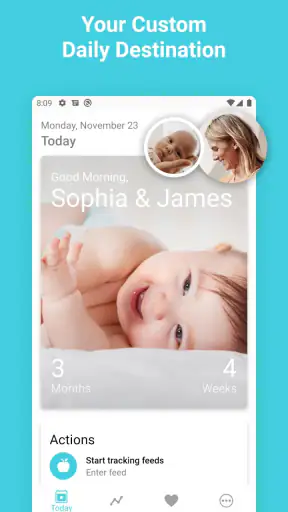
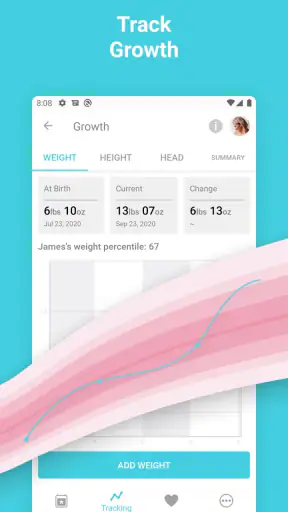

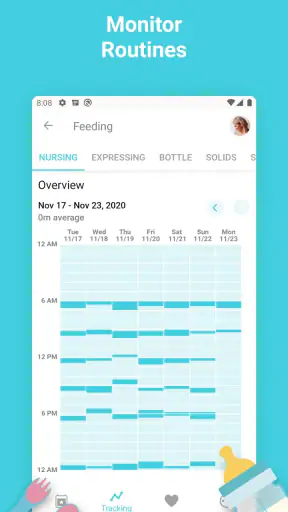
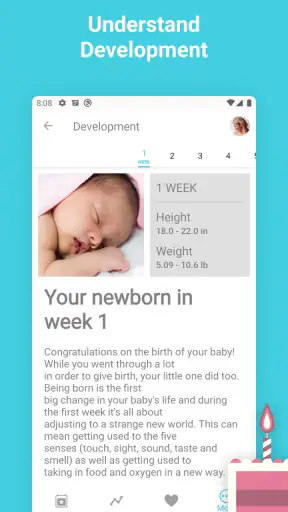
When a baby arrives, even simple questions can become surprisingly difficult to answer: When was the last feeding? How long did the nap last? Has a new milestone appeared, or am I simply noticing a change because I am tired? Baby + | Your Baby Tracker is designed for that first kind of uncertainty. I found it most useful as a lightweight record for growth, milestones, and breastfeeding rather than as an all-purpose parenting command center. Its value comes from turning scattered memories into a routine I can review.
The app is free, aimed at everyone, and comes from Philips Electronics UK Limited. It has been available since July 29, 2016, and the current version is 3.2. That history matters because this is not a brand-new tracker trying to win attention with novelty; it is an established parenting app that has had time to become familiar to many families. Its average rating is 4.7 from around 99 thousand ratings, and it has passed 5 million installs, which makes it easier for me to take its basic purpose seriously.
How Baby + feels after the first week
My first impression is that the app makes sense when I use it at the moment something happens, not later when I am trying to reconstruct the day. A feeding, a new skill, or a growth-related observation is much easier to record while it is fresh. That sounds obvious, but it is the difference between a tracker becoming part of a routine and becoming another forgotten icon on a phone.
The strongest early appeal is its focus. Baby + is not trying to be a general household organizer, a shopping list, or a social network. Its center is the baby’s development, with particular attention to milestones and breastfeeding. For a parent who wants a single place to keep those observations, the narrower purpose feels calmer than opening a broad parenting platform filled with unrelated material.
I also appreciate that the app can help create a shared vocabulary between daily life and appointments. Instead of saying only that a baby “seems more active,” I can look back at the small changes I recorded and describe them more clearly. That does not replace professional medical advice, but it can make a conversation with a pediatrician more organized. The useful distinction is that the app helps me remember; it does not decide whether a development is medically normal.
During the first week, the best approach is to keep the habit deliberately small. I would not try to document every minor event. I would begin with the information I genuinely expect to revisit, such as breastfeeding notes, meaningful milestones, and changes in growth. A tracker becomes tiring when every ordinary moment feels like an administrative task. Baby + works better when I treat it as a memory aid rather than a demand to produce a perfect diary.
That is also where the app’s breastfeeding focus can be helpful. New parents often remember the emotional impression of a difficult day but lose the sequence of practical details. Recording feeding-related information can give the day a clearer shape. The trade-off is that logging during a night feeding is not always convenient. If I have to unlock the phone, navigate several screens, or make a decision about what deserves an entry, the habit can break quickly.
I would therefore use a simple rule: record details that will change what I do later. If an entry will help me notice a pattern, prepare for a discussion, or remember an important stage, it earns its place. If it is only being added because I feel guilty about missing something, it probably does not. This approach keeps the first-week experience useful without turning it into a test of parental discipline.
A realistic day with the tracker
Imagine a morning after a broken night. I may remember that breastfeeding felt different, but not the order of events. Later, the baby reaches for a toy in a new way, and by afternoon I notice another small change. With Baby +, I can capture the feeding-related note and the milestone while they are still clear. At the end of the day, I have a more reliable account than I would get from trying to remember everything over breakfast the next morning.
The important benefit in that scenario is not the number of entries. It is the reduction in mental load. The app gives me somewhere to put information that would otherwise compete for attention with laundry, meals, messages, and sleep. That makes it especially appealing during the early stage when the days feel repetitive but the baby is changing quickly.
What remains useful month after month
The first-week novelty is easy to understand. The harder question is whether the app still deserves space on the phone after the excitement of a new baby has settled into ordinary life. In my experience, its lasting value depends on whether I use it as a selective record. If I expect it to provide constant entertainment or solve every parenting problem, it will feel limited. If I use it to preserve meaningful developmental notes, it has a better chance of staying relevant.
Milestones are the clearest long-term reason to return. They are not only moments to celebrate; they can become a timeline of how a child is changing. I find that more useful when entries include a small amount of context rather than a bare label. A note about what happened, where it occurred, or what the baby tried before succeeding can make the record much more valuable months later.
There is a subtle advantage to recording observations close to the event: it reduces the tendency to compare a child with every baby mentioned in a parenting group. A personal timeline keeps attention on the individual child. That does not eliminate anxiety, but it can shift the question from “Is my baby keeping up with everyone else?” to “What has changed since my last observation?” For me, that is a healthier use of a tracking app.
Breastfeeding records can also have recurring value, especially during periods when feeding patterns change. A parent may want to review how a routine evolved, identify a question before an appointment, or explain a pattern to another caregiver. The app is more useful here when both parents or caregivers agree on what needs to be recorded. Otherwise, one person can end up carrying the entire maintenance burden while everyone benefits from the information.
That shared-use issue is important. A tracker is only as complete as the moments that actually get logged. If one caregiver records breastfeeding but nobody records milestones, the history can look more precise than it really is. I would decide in advance which events matter and who will enter them. Even a simple agreement, such as “record significant changes and anything we want to discuss with a doctor,” can prevent the app from becoming a one-person chore.
Another practical use is preparing for a visit or a family conversation. Rather than searching through scattered notes, I can review the app and identify the few observations worth bringing up. I would still avoid treating the timeline as a diagnosis tool. A neat record can make concerns easier to explain, but it cannot interpret symptoms or confirm that development is on schedule.
The app is also a better fit for parents who value continuity over constant detail. There is no need to create a complete minute-by-minute history for the record to become meaningful. A selective timeline can preserve the moments that are otherwise lost to exhaustion. That is the kind of recurring value that survives after the initial curiosity fades.
Where it sits beside ordinary alternatives
The usual alternative is a paper notebook, a notes app, or a calendar. Those options are flexible and familiar, and they may be better for a parent who wants to write long reflections or combine baby notes with household planning. A notebook also avoids the temptation to check a phone during every quiet moment. For a very low-tech routine, paper can be the more sustainable choice.
Baby + has an advantage over a blank notes page because its purpose is already shaped around baby growth, milestones, and breastfeeding. I do not have to invent a filing system from scratch. That structure is useful when I am tired and want to record an observation without deciding where it belongs. The drawback is that a specialized structure can feel restrictive if my routine does not match the way the app expects me to think.
A broad parenting app may offer more categories, reminders, or household tools, making it preferable for someone who wants feeding, sleep, health, shopping, and appointments in one place. But more categories can also create more work. I would choose Baby + when I want a focused developmental record, not when I want to manage the entire family calendar from one dashboard.
Maintenance, fatigue, and the point where it stops helping
The main maintenance burden is not installation or setup; it is remembering to log consistently. Every tracker makes the same quiet demand: pay attention, enter the detail, and keep doing it. That demand can be reasonable in the first weeks, then become irritating when sleep deprivation continues or when the baby’s routine changes faster than the parent’s ability to update the app.
Breastfeeding can make this especially demanding because it happens frequently and at inconvenient times. A parent who wants a highly detailed feeding history may appreciate the discipline, but another parent may find that the phone becomes a symbol of pressure. I would not recommend forcing a detailed logging routine if it makes feeding feel like a performance review. The app should support care, not make the caregiver feel watched by their own records.
There is also a risk of false completeness. A well-organized timeline can look authoritative even when it contains gaps. Missed entries do not necessarily mean missed care; they often mean the parent was busy caring for the baby. I would read the record as a sample of real life, not as a perfect account. That mindset prevents the app from turning ordinary forgetfulness into unnecessary guilt.
Another source of fatigue is reviewing information without a clear purpose. If I open the app only to scroll through old entries, the habit can become passive and eventually disappear. I get more value when I return with a question: What changed this month? Which milestone do I want to remember? What should I mention at the next appointment? A specific reason makes maintenance feel worthwhile.
Parents should also consider whether their household needs detailed tracking at all. Some families prefer to notice patterns informally, while others need written records because several caregivers share responsibilities. Baby + is more compelling in the second situation, provided everyone agrees on the routine. It is less suitable for someone who dislikes logging or who already has a reliable paper system that they actually use.
The age rating of Everyone makes the app broadly approachable, and its free price removes the financial barrier to trying it. Still, “free” does not mean costless in practice. The real cost is attention. A parent should ask whether the information saved will repay the time spent entering it. For many users, milestone notes and selected breastfeeding observations can justify that time. For someone seeking a complete life-management system, the effort may feel scattered across too many separate tools.
One tip I found valuable is to review the record at a fixed, calm moment rather than repeatedly checking it throughout the day. A short weekly review can help identify meaningful changes and clean up the habit without making the app part of every interaction with the baby. Another is to write entries for the future parent you will be, not for an imaginary perfect archivist. A brief, specific note is often more useful than an elaborate entry that you will stop making after a few days.
I would also keep personal interpretation separate from medical conclusions. It is fine to write that a baby tried a new movement or that breastfeeding felt different. It is not wise to use the app alone to decide that a concern is harmless or urgent. When something worries me, the record can support a conversation with a qualified professional, but it should never delay that conversation.
Who will keep using it?
I think Baby + is best for new parents who want a focused, gentle way to preserve developmental moments and breastfeeding-related information. It is also a good match for caregivers who are tired of relying on memory but do not want a large parenting suite with every possible category. The app’s established presence, broad adoption, and strong average rating suggest that this focused approach has connected with a substantial audience.
I would be more cautious if you want advanced customization, extensive family scheduling, or one unified record for every aspect of childcare. In that case, a broader tool may save time by keeping more tasks together. I would also skip it if you already maintain a notebook consistently and enjoy that process. A specialized app is not automatically better than a simple method that fits your life.
The app may be particularly useful during transitions: the first weeks at home, a change in feeding routine, or a period when new milestones appear close together. Those are moments when memory becomes unreliable and a selective record can bring order. Once the routine becomes stable, its role may shrink, but that does not make the earlier record pointless. A short, well-kept history can remain valuable even if daily logging stops.
My long-term verdict
After the first-week appeal fades, Baby + earns lasting space only when I use it with restraint. Its recurring value is not in collecting every possible detail; it is in helping me remember the details I will genuinely want later. The focus on growth, milestones, and breastfeeding gives the app a clear identity, while the free price makes experimentation easy.
The maintenance burden is real. Night feeds, changing routines, incomplete entries, and the emotional pressure of comparing babies can all make tracking tiring. I would not recommend turning the app into a strict daily obligation. A selective workflow, shared between caregivers when possible, is more sustainable than chasing a perfect record.
For me, the best reason to keep using it is the combination of practical memory support and a personal developmental timeline. It can help prepare a clearer question for a professional, preserve a milestone that might otherwise blur into the next sleepless day, and give caregivers a common reference point. Those are modest benefits, but they are exactly the kind that can matter repeatedly.
My recommendation is to try Baby + as a focused record, not as a complete parenting system. Give it a short trial with only the entries you expect to revisit. If it reduces mental clutter, keep the habit. If logging starts competing with feeding, rest, or time with the baby, simplify it or return to a notebook. The app is at its best when it quietly supports family life rather than asking to become another responsibility.
That balance is why I can recommend Baby + | Your Baby Tracker to parents who want structure without a complicated planning platform. It does not need to dominate the day to be useful. When the novelty disappears, its staying power comes from a simple question: does this record help me remember, understand, or explain something that matters? If the answer is yes, this app has a sensible place in the routine.


